
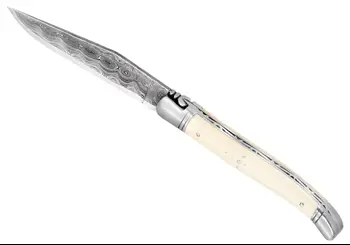
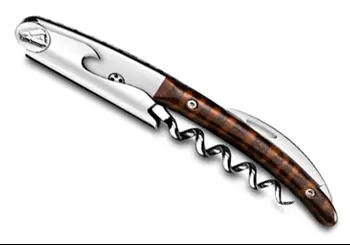
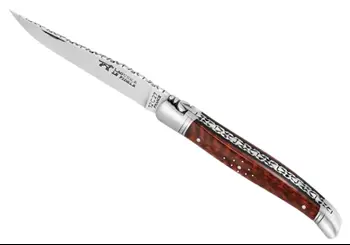
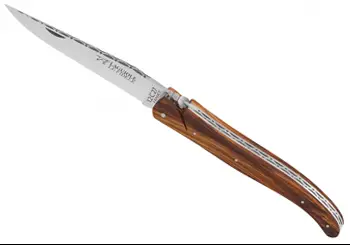
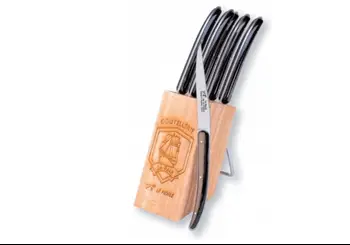












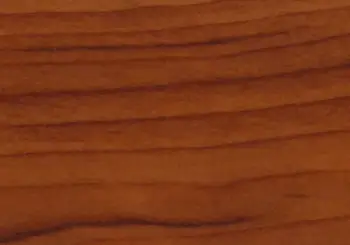

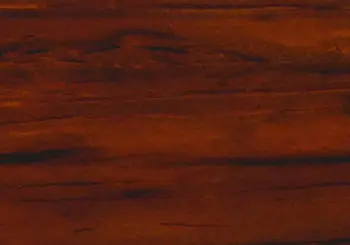








Traditional Laguiole knives
Laguiole Knife France – Traditional Laguiole Knives
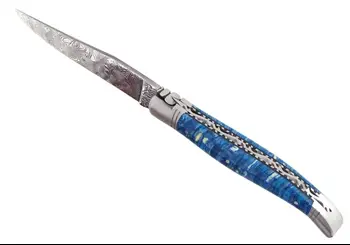
Laguiole knife France models embody the original spirit of French cutlery craftsmanship. Inspired by 19th-century models, these traditional Laguiole knives are recognized for their slim silhouette, elegant lines, and iconic “bee” (or “fly”) detail forged into the backspring.
Designed as everyday pocket knives for farmers, shepherds, and craftsmen, Laguiole knives from France remain timeless tools—refined, balanced, and built to last. A true French Laguiole knife combines heritage, practicality, and artisanal character.
The enduring appeal of the Laguiole knife France style comes from this rare balance between simplicity and distinction. It is a folding knife with a clear original purpose: to serve as a reliable daily cutting tool. Yet over time, it has become much more than that. A traditional Laguiole knife from France is now appreciated as a symbol of French craftsmanship, rural heritage, and the pleasure of owning a well-made object that feels both useful and beautiful. Its profile is instantly recognizable, yet never excessive. Its elegance is discreet, rooted in proportion, materials, and detail rather than in ornament alone.
Unlike many modern pocket knives that emphasize aggressive styling, heavy mechanisms, or technical complexity, the Laguiole knife France approach is based on restraint. The classic curved handle, the single blade, the slip-joint mechanism, and the visual harmony of the spring and bolsters all contribute to a knife that feels refined in the hand and natural in use. This is precisely why so many buyers continue to search for terms such as Laguiole knife France, traditional Laguiole knives, Laguiole knives from France, and French Laguiole knife. They are looking not only for a cutting tool, but also for authenticity, heritage, and design that has stood the test of time.
The history behind these knives adds to their appeal. Traditional Laguiole knife France models originated in the village of Laguiole in southern France during the 19th century. They were practical companions for everyday rural life, used by farmers, shepherds, artisans, and travelers. Their function was simple, but their design evolved with remarkable clarity and elegance. Over generations, the Laguiole became one of the most recognizable folding knife forms in Europe. Even today, when materials and finishing techniques may vary, the essential identity remains the same: a knife that reflects French regional tradition and practical craftsmanship.
For many users, the attraction of a French Laguiole knife also lies in its usability. A traditional model is well suited to food preparation, picnics, opening parcels, countryside meals, travel, and other light daily tasks. It is not meant to imitate a tactical tool or a modern survival knife. Its purpose is different. The Laguiole knife France format is civilized, balanced, and pleasant to carry. It feels equally at home in a pocket, on a wooden table during lunch outdoors, or in a collection of heritage cutlery. That flexibility is one reason it remains so relevant in modern life.
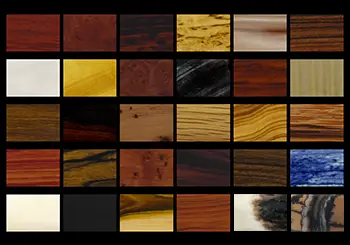
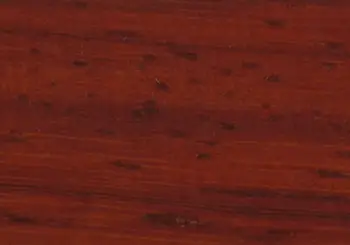
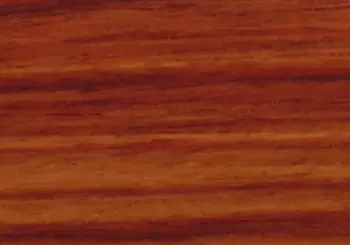
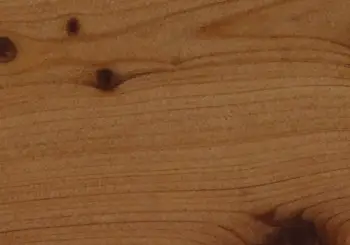
Materials are another essential part of the category’s identity. A traditional Laguiole knife France model often uses natural handle materials such as olive wood, oak, juniper, rosewood, royal ebony, serpent wood, horn, or other noble woods. These materials are not only attractive, they also bring individuality. Grain, tone, pattern, and texture vary from one handle to another, meaning that no two knives are ever completely identical. This natural variation reinforces the artisanal character of the knife and explains why many buyers specifically look for a Laguiole knife France wood handle or a traditional French Laguiole knife with natural materials.
Blade steel choice is equally important. Stainless steel offers easy maintenance and strong corrosion resistance, which makes it especially practical for everyday use. Carbon steel appeals to enthusiasts who enjoy traditional sharpening feel, a fine working edge, and the natural patina that develops with age. In the context of a Laguiole knife France purchase, the choice between stainless and carbon often reflects the user’s priorities: convenience and low maintenance on one side, or heritage character and more traditional behavior on the other. Both have strong legitimacy within the category.
The handcrafted details are what turn a good traditional knife into an especially desirable one. On better-quality models, the spring may feature hand-filed decorative patterns known as guillochage, and the iconic bee detail may be more precisely integrated into the backspring. The centering of the blade, the smoothness of the opening action, the fit between bolsters and handle scales, and the overall finish all matter greatly. A premium Laguiole knife France is usually appreciated not because of one single feature, but because every small feature contributes to a more satisfying whole.
This category benefits from several strong buying intentions. Some users are looking for an authentic Laguiole knife France model. Others are searching for a traditional Laguiole folding knife with a classic wood handle. Others want a French Laguiole knife as a gift, as a first fine knife, or as part of a growing collection. A strong category page therefore needs to do several things well at once: explain what makes the model traditional, highlight the role of materials and finishing, guide the user on steel and size, and reassure buyers who want something genuinely rooted in French cutlery heritage.
The gift value of a Laguiole knife France model should not be underestimated. These knives are elegant, useful, and symbolic. They work well as gifts for birthdays, retirements, Father’s Day, collectors, countryside enthusiasts, or anyone who appreciates craftsmanship and French-made style. A traditional Laguiole has the advantage of feeling personal without being overly specific, refined without being ostentatious, and durable enough to remain meaningful over time. That makes it a particularly strong choice for buyers who want a gift with real character.
Collectors are also drawn to traditional Laguiole knives from France because of the richness of handle materials and finishing styles. Juniper, oak, olive wood, serpent wood, rosewood, and royal ebony all produce different moods and visual identities. Some buyers are attracted to the warmth of olive wood, others to the depth of ebony, and others to the distinctive grain of more unusual woods. The same traditional silhouette can therefore feel rustic, elegant, Mediterranean, or highly refined depending on the chosen material. This makes the category both practical and collectible.
In the end, the Laguiole knife France style remains compelling because it offers more than novelty. It offers continuity. It connects daily use with heritage, simplicity with refinement, and craftsmanship with practical life. For buyers who want a folding knife that feels authentically French, visually balanced, and satisfying to own and use, traditional Laguiole knives remain one of the strongest and most timeless choices available.
The Heritage of Traditional Laguiole Knife France Craftsmanship
Traditional Laguiole knife France models originated in the village of Laguiole in southern France during the early 1800s. Over time, their clean and functional design became one of the most recognizable pocket knife styles in Europe.
Unlike modern tactical knives, a Laguiole knife France design emphasizes simplicity, balance, and craftsmanship rather than mechanical complexity.
Single blade simplicity
Most traditional models feature a single blade. This minimalist design reflects the original purpose of the knife: a reliable daily cutting tool without unnecessary additions. For buyers seeking an authentic Laguiole knife France style, this simplicity is part of its appeal.
Natural materials
Traditional Laguiole knives from France often use natural materials that develop character over time. Each handle may show unique grain patterns or subtle variations, making every knife slightly different.
- Olive wood – warm tones and Mediterranean character
- Ebony – deep, elegant appearance
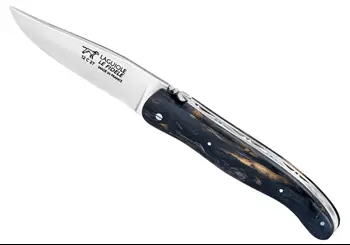
- Horn – authentic heritage look with natural variation
- Other hardwoods – distinctive textures and finishes
Choosing the Right Traditional Laguiole Knife France Model
Select the right size
Traditional Laguiole knives are available in different folded lengths. A mid-size model offers a balanced grip and versatile cutting performance, while smaller versions are more discreet for pocket carry. Choosing the right Laguiole knife France model depends on how you plan to use it.
Choose your blade steel
- Stainless steel – easy to maintain and corrosion-resistant
- Carbon steel – excellent sharpness and develops a natural patina
Stainless steel is practical for everyday use, while carbon steel appeals to enthusiasts who appreciate traditional sharpening feel and aging character in a French Laguiole knife.
Appreciate handcrafted details
On higher-quality traditional models, the backspring may feature hand-filed decorative patterns (guillochage), and the bee detail may be finely integrated into the spring. These elements reflect the artisanal attention to detail that defines a premium Laguiole knife France.
Buying Guide – How to Choose a Laguiole Knife France Model
1. Define your main use
Start by thinking about how you will use your Laguiole knife France model. For discreet pocket carry and daily light tasks, a compact or mid-size knife is often the best option. For buyers who value stronger presence in the hand and a slightly more substantial feel, a larger model may be more satisfying. Traditional Laguiole knives are versatile, but choosing according to real use will lead to a more satisfying purchase.
2. Choose between stainless steel and carbon steel
If you want easy everyday care, stainless steel is usually the better choice. It is resistant to corrosion and forgiving in regular use. If you enjoy traditional knife maintenance, sharpening, and the lived-in character of a blade that develops patina, carbon steel may feel more authentic. Many enthusiasts consider carbon steel the most heritage-faithful option for a traditional Laguiole knife France purchase.
3. Select the handle material that matches your style
Handle choice has a major effect on the look and personality of the knife. Olive wood feels warm and classic, oak feels grounded and traditional, juniper offers a distinctive rustic charm, serpent wood and rosewood can feel more decorative, and royal ebony brings a more formal and premium appearance. Choosing a Laguiole knife France wood handle is often as much about identity and emotion as it is about function.
4. Look for artisanal finishing details
Better-quality knives often show more care in blade centering, spring tension, bee integration, and guillochage on the backspring. These details matter because they change the overall feel of the knife. A refined French Laguiole knife should feel coherent, balanced, and smoothly finished from handle to blade.
5. Think about gifting or collecting
If you are buying for a gift, woods with strong visual appeal such as olive wood, rosewood, or royal ebony often work particularly well. If you are collecting, you may want to explore variety across materials, steel types, and finishing styles. This is one of the pleasures of the Laguiole knife France category: the same traditional pattern can take on very different personalities depending on the chosen materials.
Comparison – Which Traditional Laguiole Knife France Model Is Right for You?
| Type of model | Best for | Main advantages | Things to consider |
|---|---|---|---|
| Stainless steel Laguiole knife France | Everyday carry and low-maintenance use | Easy care, practical daily use, good corrosion resistance | Less traditional aging character than carbon steel |
| Carbon steel Laguiole knife France | Traditional enthusiasts and heritage buyers | Very sharp edge, classic feel, natural patina over time | Requires more careful drying and maintenance |
| Olive wood handle model | Buyers seeking warmth and Mediterranean charm | Natural grain, timeless look, strong gift appeal | Wood appearance varies naturally from knife to knife |
| Royal ebony handle model | Premium and collector-oriented buyers | Deep tone, elegant finish, refined appearance | Often chosen as much for style as for function |
| Juniper, oak, serpent wood or rosewood model | Collectors and buyers wanting distinctive woods | Unique grain, stronger personality, material variety | Each wood creates a different mood and visual effect |
Laguiole Knife France Care & Maintenance
A traditional Laguiole knife France model can last for decades with proper care. Regular maintenance preserves both function and appearance.
- Hand wash only
- Dry immediately after cleaning
- Apply light oil to carbon steel blades to prevent oxidation
- Occasionally oil the pivot for smooth action
- Store in a dry environment
Natural handle materials also benefit from being kept away from prolonged humidity. With simple but regular care, a Laguiole knife from France can remain both beautiful and fully functional for many years.
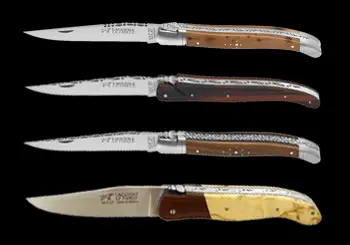
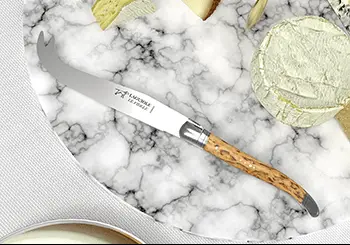
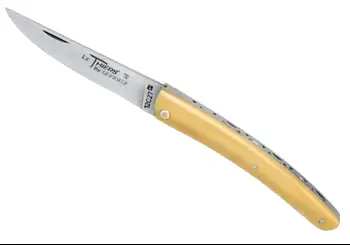
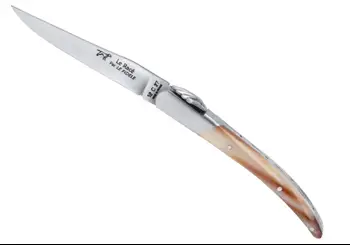
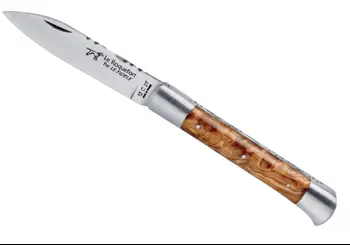
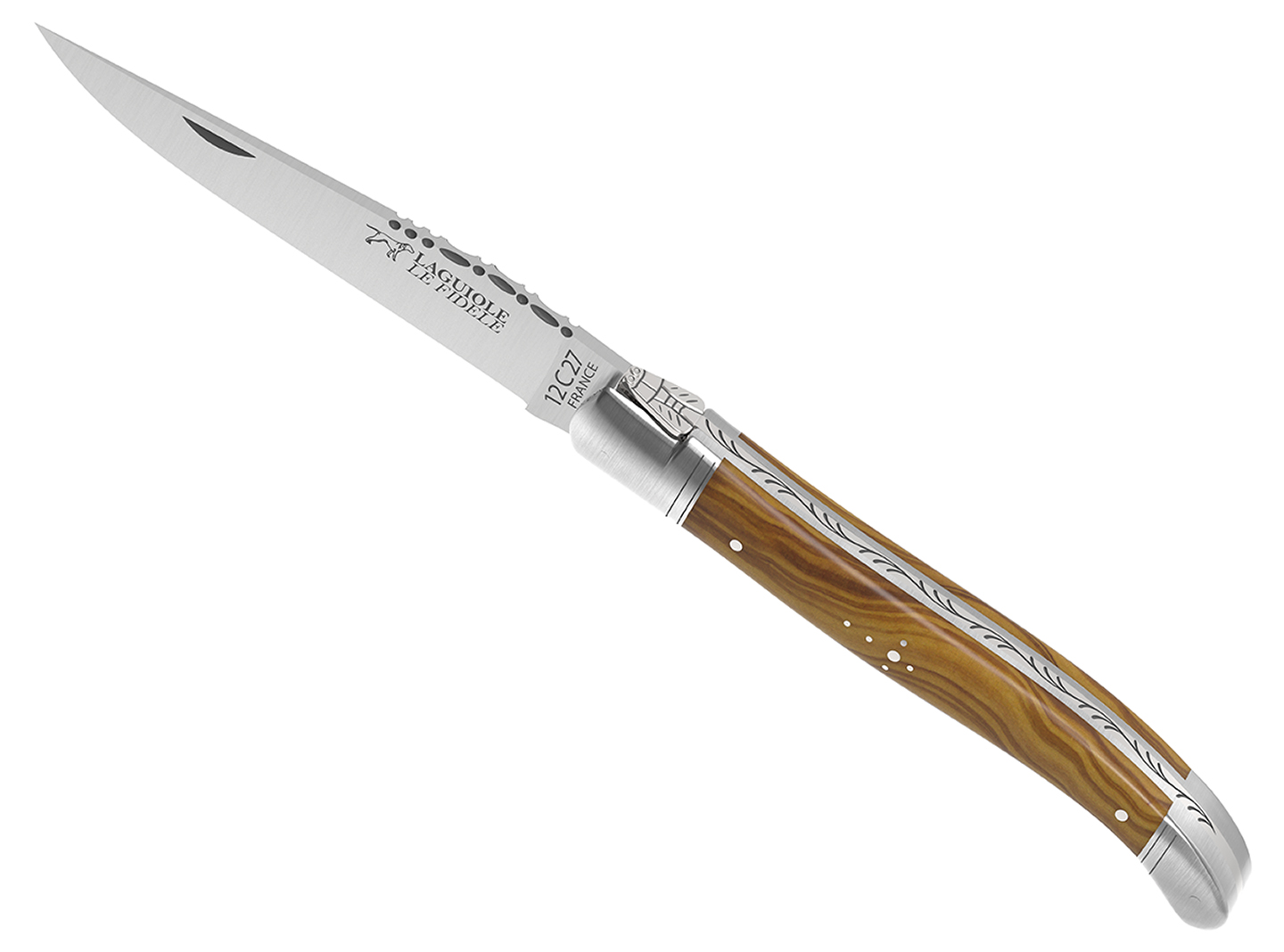
Laguiole knife France gallery - traditional Laguiole knives with wood handles
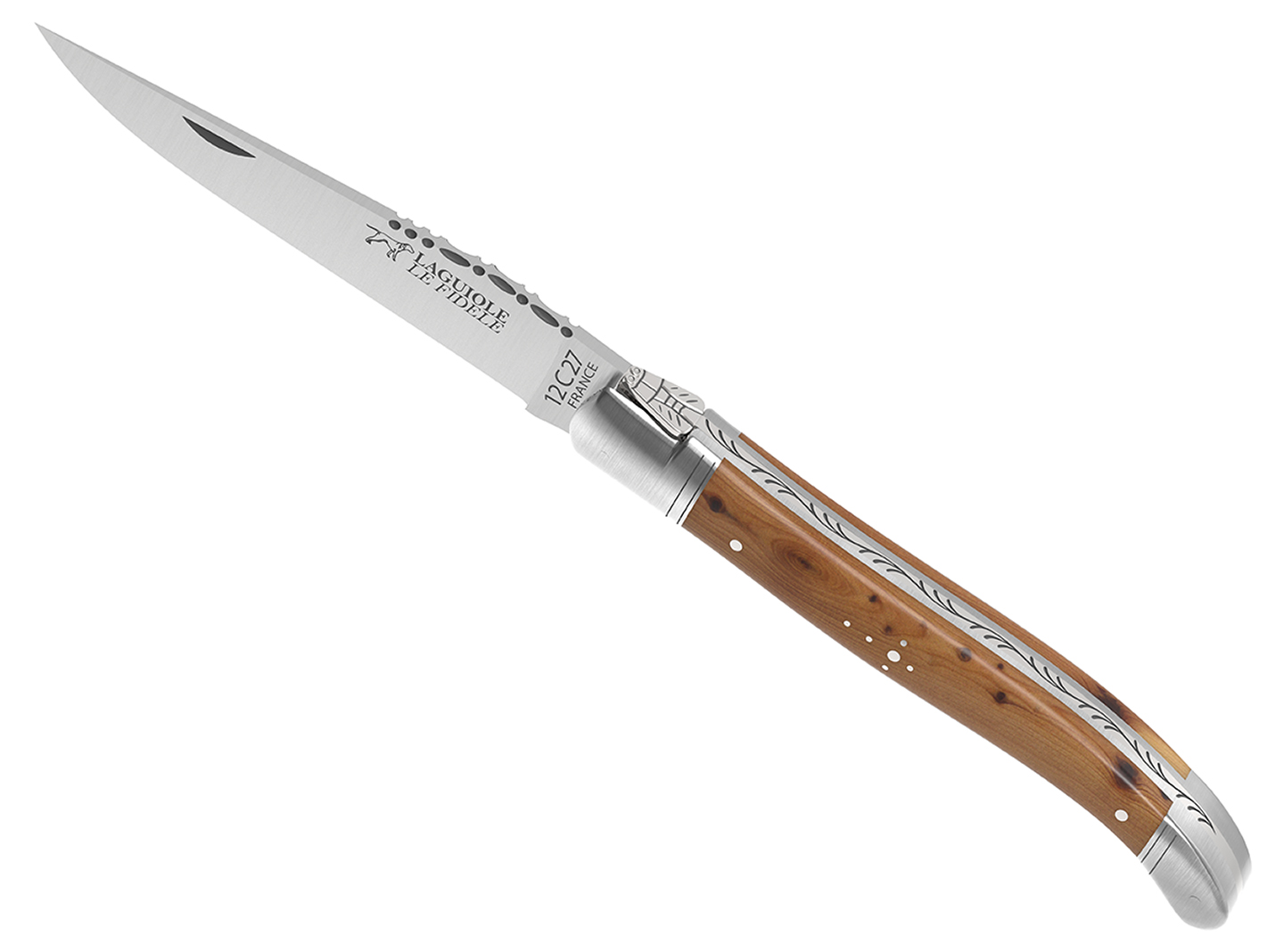
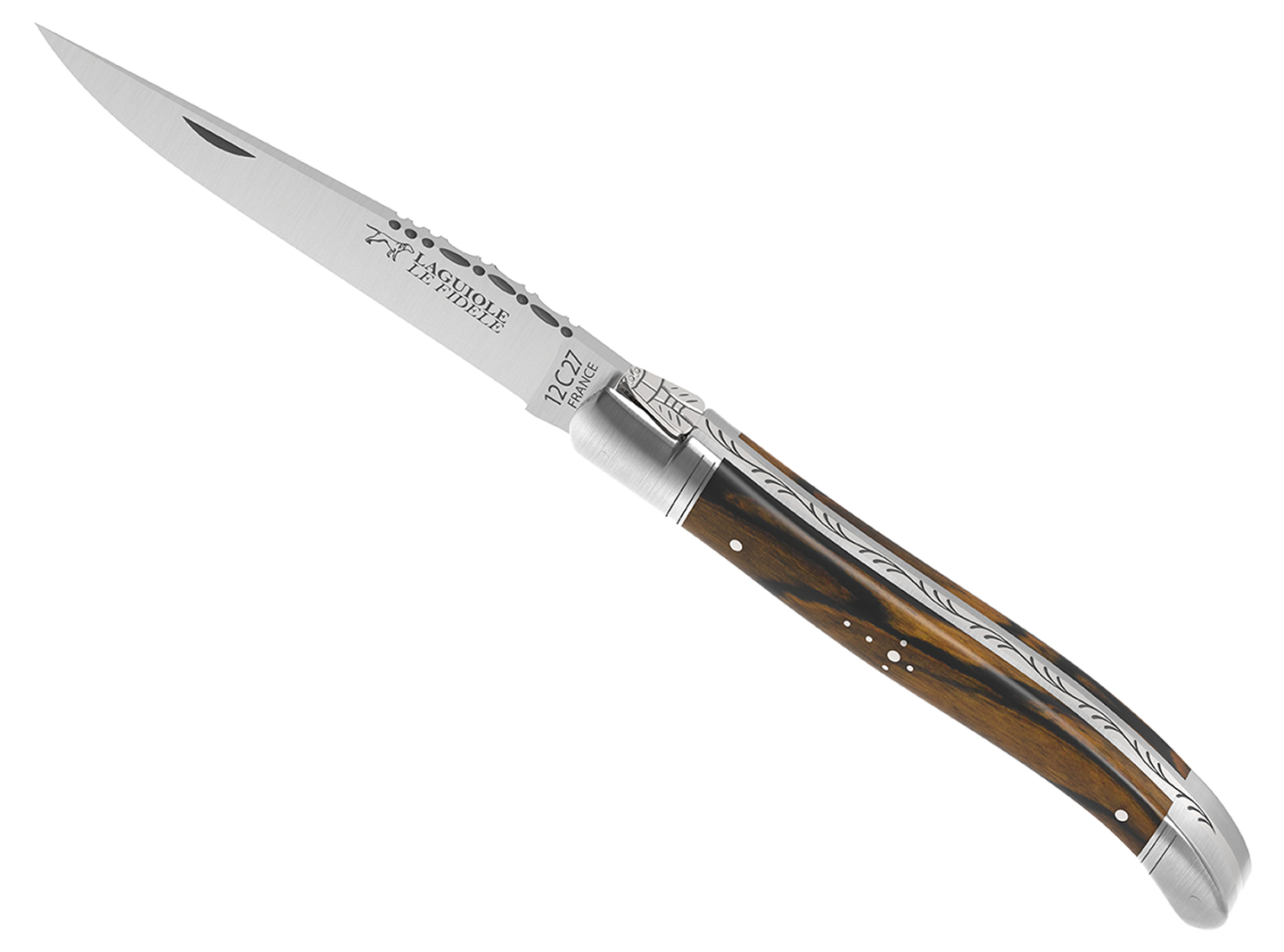
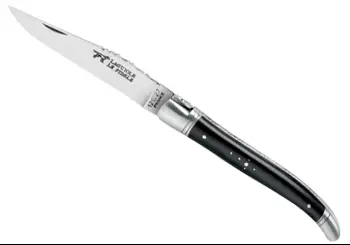
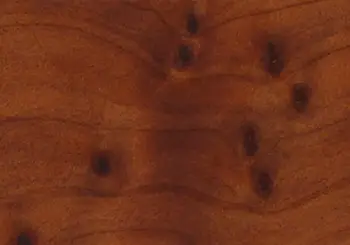
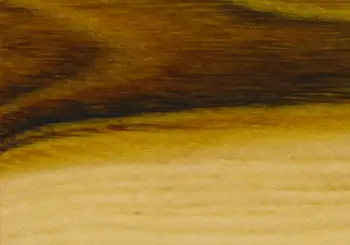
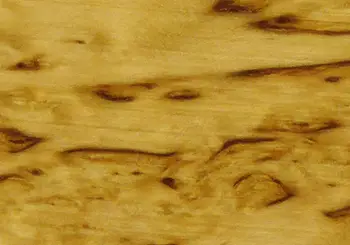
Laguiole knife with juniper wood handle and 2 stainless steel bolsters
Laguiole knife with oak wood handle and 2 stainless steel bolsters
Laguiole knife with olive wood handle and 2 stainless steel bolsters
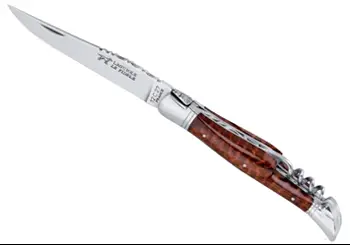
Laguiole knife with serpent wood handle and 2 stainless steel bolsters
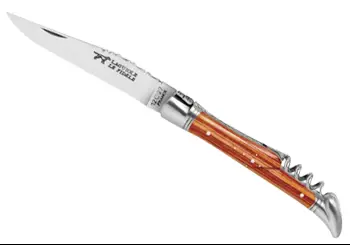
Laguiole knife with rosewood handle and 2 stainless steel bolsters
Laguiole knife with royal ebony wood handle and 2 stainless steel bolsters
FAQ: Traditional Laguiole Knives
What makes a Laguiole knife “traditional”?
A traditional Laguiole knife France model follows the original design: slim curved handle, single blade, slip-joint mechanism, and signature bee detail. It prioritizes heritage craftsmanship and simplicity. What makes it especially distinctive is that the traditional form has remained relevant without needing major reinvention. Buyers looking for a traditional French Laguiole knife usually want exactly this balance of purity, history, and practical beauty rather than extra tools or more modern styling.
Do traditional Laguiole knives have a locking blade?
No. Traditional Laguiole knives from France typically use a non-locking slip-joint mechanism, reflecting the historical design of the 19th century. This is an important part of their identity. The knife opens with spring tension rather than a lock, which contributes to its slim profile and classic mechanical feel. Many buyers appreciate this because it keeps the knife closer to its original heritage character.
Are traditional Laguiole knives good for everyday use?
Yes. A Laguiole knife France model is well suited for daily tasks such as food preparation, opening packages, and light utility work. Its size, balance, and pocket-friendly format make it especially comfortable as an everyday companion. It is not designed as a heavy-duty tactical tool, but for the types of tasks most users actually encounter in ordinary life. That is precisely why the traditional Laguiole remains so appealing today.
Is carbon steel better for a traditional Laguiole?
Carbon steel offers a very sharp edge and develops a natural patina over time, which many enthusiasts appreciate. However, it requires more care than stainless steel. For buyers who value authenticity, aging character, and classic sharpening feel, carbon steel often feels especially appropriate in a Laguiole knife France model. For users who want the easiest possible daily maintenance, stainless steel is often the more practical solution. Neither is universally better; they simply suit different preferences.
Why do handle materials vary in appearance?
Natural materials such as wood and horn are unique. Grain, color, and pattern variations are part of the character of a traditional French Laguiole knife. This is one of the reasons these knives feel so personal. An olive wood handle, for example, may show warmer or stronger grain depending on the piece, while ebony may vary in depth and finish. These differences are not flaws; they are part of the authenticity and visual richness of the knife.
What is the bee on a traditional Laguiole knife?
The bee, sometimes called the fly, is a decorative and symbolic element located on the backspring. It is one of the most recognizable features of the Laguiole knife France style. On better-finished knives, the bee is integrated with particular care and may be accompanied by hand-filed decorative work on the spring. This detail is iconic because it immediately connects the knife to the Laguiole tradition.
Is a traditional Laguiole knife from France a good gift?
Yes. A Laguiole knife France model makes a strong gift because it combines utility, elegance, heritage, and lasting value. It suits birthdays, retirement gifts, collectors, countryside enthusiasts, and anyone who appreciates fine objects with real function. Because the knife is both practical and symbolic, it tends to feel more memorable than many other gift options.
How do I choose between olive wood, juniper, oak, rosewood, serpent wood, and ebony?
The best choice depends mainly on the visual and emotional tone you prefer. Olive wood feels warm and classic, juniper can feel rustic and distinctive, oak feels grounded and traditional, rosewood often appears richer and more decorative, serpent wood stands out for its unique figure, and royal ebony creates a more formal premium look. All of these options belong naturally within the Laguiole knife France tradition, so the decision often comes down to personal taste rather than function alone.
Quick Selection Guide
Most authentic heritage choice
Carbon steel blade with a horn or olive wood handle — true to the original spirit of traditional Laguiole craftsmanship.
Low-maintenance traditional option
Stainless steel blade with a classic wood handle — combining heritage design with easier everyday care.
Best for visual warmth
Olive wood or juniper handle — natural grain, timeless character, and strong traditional appeal.
Best premium traditional look
Royal ebony or rosewood handle — refined appearance, elegant finish, and excellent gift appeal.
Frequent searches
- laguiole knife france
- Laguiole knives from France
- French Laguiole knife
- traditional Laguiole knives
- traditional Laguiole knife France
- authentic Laguiole knife France
- Laguiole knife France wood handle
- Laguiole knife France olive wood
- Laguiole knife France ebony wood
- traditional French folding knife
- Laguiole pocket knife made in France
- best traditional Laguiole knife
- carbon steel Laguiole knife France
- stainless steel traditional Laguiole knife
- French heritage pocket knife Laguiole
Summary
Laguiole knife France models remain among the most elegant and enduring expressions of French cutlery heritage. With their slim curved profile, single blade design, slip-joint mechanism, natural handle materials, and iconic bee detail, these traditional knives combine practicality with genuine artisanal character. Whether you choose stainless steel for easier daily care or carbon steel for a more heritage-focused feel, a French Laguiole knife offers timeless appeal, everyday usefulness, and the lasting pleasure of owning an authentic traditional folding knife.


