
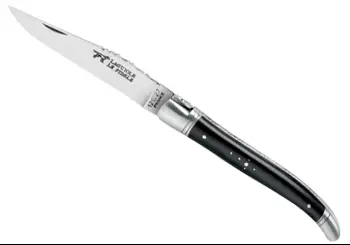
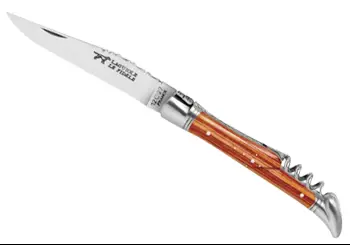
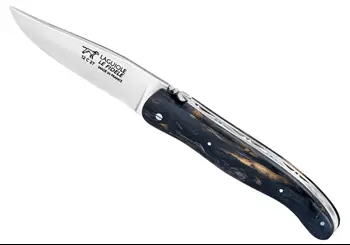
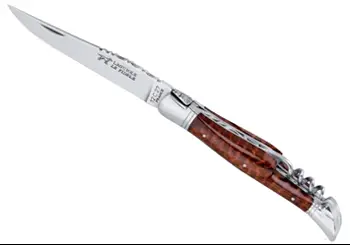
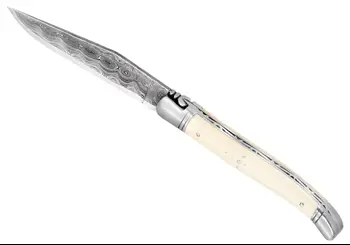
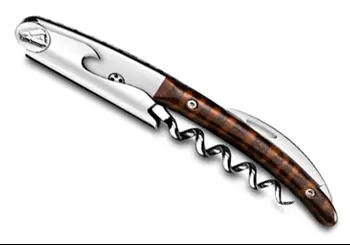
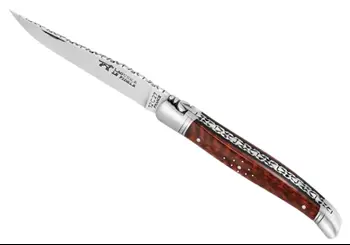
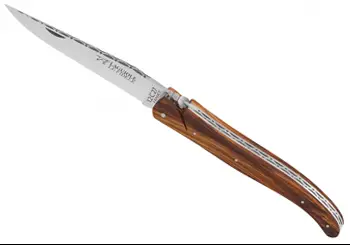
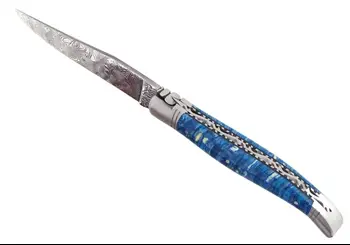
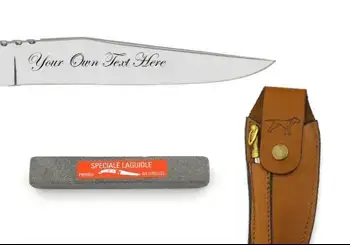
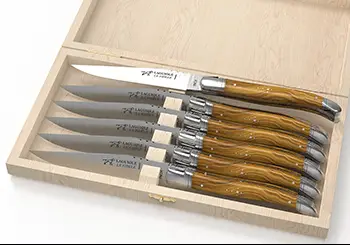
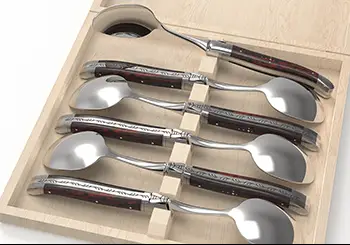
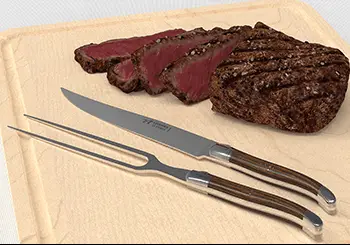
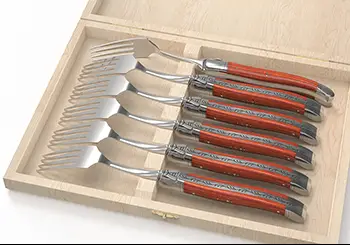




























Laguiole knives with damascus blade
Damascus Blade Kitchen Knife – Laguiole Knives with Damascus Blade
A damascus blade kitchen knife combines striking layered steel patterns with refined cutting performance. In this Laguiole collection, the timeless French knife silhouette meets the visual depth of Damascus steel, creating a knife that is both functional and distinctive.
Beyond its appearance, a Damascus blade kitchen knife is appreciated for its premium character and elegant presentation. Paired with noble handle materials such as olive wood, ebony, or horn, a Laguiole Damascus knife becomes both a practical cutting tool and a beautiful collector piece.
The appeal of a damascus blade kitchen knife lies in the rare balance between utility and visual identity. Many kitchen and table knives are chosen for performance alone, while others are selected mainly for presentation. A Damascus Laguiole knife sits at the intersection of both. It offers the elegance of a traditional French silhouette, the tactile pleasure of noble handle materials, and the distinctive layered blade pattern that makes each knife feel more individual. For buyers looking for a knife that goes beyond ordinary daily cutlery, this category answers a very specific need: a knife that performs well, looks exceptional, and feels premium every time it is handled.
In practical terms, a Damascus blade kitchen knife is appreciated by several different types of users. Some buyers want a refined cutting tool for light kitchen work, food preparation, or table-side use. Others are searching for a premium folding knife or Laguiole-style knife with a stronger collector identity. Others simply want a memorable gift with visual impact. This is why the category works so well in both SEO and SEO OAI terms: the search intent behind phrases such as damascus blade kitchen knife, Damascus Laguiole knife, pattern welded kitchen knife, or premium Damascus knife gift is not only about function, but also about craftsmanship, uniqueness, and presentation.
Modern Damascus steel, often described as pattern-welded steel, is especially valued because of the layered pattern revealed on the blade. This pattern gives every knife a distinct personality. Even when two knives are produced using the same technique, the final visual rhythm of the steel will differ slightly. That uniqueness is one of the strongest reasons why a damascus blade kitchen knife feels more special than a standard blade. It brings an immediate sense of rarity and artisan character, even before the knife is used.
In the Laguiole universe, Damascus steel takes on an especially elegant dimension. The traditional Laguiole profile is already associated with balance, refinement, and heritage design. When combined with a Damascus blade, the result becomes more expressive without losing the essential harmony of the original form. The blade pattern adds visual depth, while the curved handle, sculpted spring, and signature bee or fly detail preserve the unmistakable Laguiole identity. A Laguiole Damascus knife therefore appeals both to practical users and to collectors who want a knife that feels rooted in tradition but elevated by premium materials.
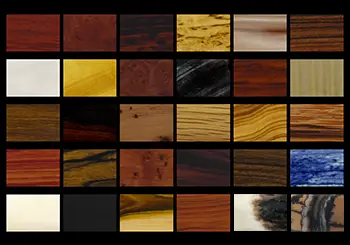
Handle material plays a major role in the final character of the knife. Olive wood creates a warm and classic contrast with the pattern of the blade. Ebony gives a more formal, luxurious look with strong visual depth. Juniper, oak, ironwood, gaiac, or serpent wood all bring different tones and textures, which influence how the Damascus pattern is perceived. Because the handle is the part most often touched and seen, it contributes as much to the user’s experience as the blade itself. For that reason, choosing a damascus blade kitchen knife is often as much about visual and tactile preference as about technical cutting considerations.
Another important advantage of this category is gifting potential. A Damascus blade kitchen knife feels immediately premium because the blade pattern is visible at a glance. Even to a non-specialist, Damascus steel communicates refinement and craftsmanship. This makes it particularly suitable for birthdays, anniversaries, weddings, retirement gifts, collector occasions, or any moment when the buyer wants a knife that feels more memorable than a standard model. The combination of layered steel, noble wood handle, and Laguiole styling creates a gift that feels both useful and symbolic.
There is also a strong emotional component in owning a Damascus knife. Because the pattern is unique, the knife feels more personal. It becomes less interchangeable and more attached to the owner’s taste. For some buyers, this matters just as much as sharpness or maintenance. They are not only buying a cutting tool; they are choosing a piece with identity. In this sense, a damascus blade kitchen knife can function as a collector object, a personal everyday companion, or a premium table and food-prep accessory depending on the model and the context of use.
From a buying perspective, the key factors are usually size, handle material, finishing details, and maintenance requirements. A mid-size Laguiole Damascus knife is often the most versatile choice because it combines balance in the hand with strong visual presence. Handle material then determines whether the knife feels more rustic, more classic, or more luxurious. Decorative details such as hand-filed guillochage on the spring and the precision of the bee detail can further distinguish a higher-end piece. These finishing points matter because they reinforce the impression that the knife is not only visually attractive, but also carefully made.
Care remains important, as with any premium blade. Proper drying, gentle cleaning, and appropriate storage help preserve both cutting performance and the clarity of the Damascus pattern. This is particularly important for users who want the knife to remain visually striking over time. Abrasive cleaning methods can dull the contrast of the pattern, while poor storage can affect both blade and handle. Fortunately, regular care is simple and greatly extends the life and beauty of the knife.
For buyers seeking something more distinctive than an ordinary knife, the damascus blade kitchen knife category offers a powerful combination of artistry, practicality, and lasting appeal. In the Laguiole tradition, Damascus becomes more than a steel treatment: it becomes part of a broader language of French craftsmanship, noble materials, and timeless design. Whether chosen for personal use, for collecting, or for gifting, a Laguiole knife with a Damascus blade remains one of the most expressive and elegant options in premium cutlery.
Why choose a Damascus blade Laguiole knife?
- Distinctive layered patterns—no two blades look exactly alike
- Premium presentation for gifting and collecting
- Refined cutting performance with a high-end feel
- Classic Laguiole silhouette with artisanal finishing
- Pairs beautifully with natural handle materials
Understanding Damascus Steel
What is Damascus steel?
Modern Damascus steel, also called pattern-welded steel, is made by layering different steels, forging them together, and shaping the blade to reveal a signature pattern. This gives each damascus blade kitchen knife a visually distinctive identity and a premium look.
Is every Damascus pattern unique?
Yes. Even when made using the same process, the final pattern varies from blade to blade. This natural variation is one of the reasons why a Damascus blade kitchen knife or Laguiole Damascus knife is so appreciated.
How to Choose Your Damascus Laguiole Knife
Select the right size
Choose a size that matches how you plan to use and carry the knife. A mid-size model is the most versatile for everyday tasks and pocket carry, while larger models offer more handle to grip and a stronger presence in hand.
Choose the right handle material
Handle choice defines the knife’s style and character. A damascus blade kitchen knife pairs particularly well with rich natural materials.
- Olive wood – warm grain with a traditional, natural look
- Ebony – deep tone for a more luxurious appearance
- Horn – classic heritage feel with natural variation
- Other hardwoods – distinctive grains and textures
Look for finishing details
On premium Laguiole knives, the backspring may feature decorative hand-filed work called guillochage, and the iconic bee or fly detail can be finely integrated. These details elevate the craftsmanship and presentation of a Damascus blade kitchen knife.
Define your main purpose
If you want a versatile knife for regular light use, a mid-size Damascus model with an olive wood or oak handle is often the most balanced option. If your goal is gifting or collecting, richer materials such as ebony, horn, ironwood, or serpent wood can create a stronger premium impression.
Buying Guide – Choosing the Right Damascus Blade Kitchen Knife
1. Think about daily use versus collector appeal
A damascus blade kitchen knife can be chosen as a practical knife, a display-worthy collector piece, or a gift. Buyers focused on frequent use often prioritize easy handling and balanced size, while collectors may focus more on pattern visibility, handle material, and artisanal finishing.
2. Prioritize a handle material that matches your taste
Olive wood feels classic and warm, oak feels grounded and traditional, juniper offers distinctive character, gaiac and ironwood feel denser and more premium, while ebony creates a more luxurious contrast with the Damascus blade. The handle plays a major role in the final identity of the knife.
3. Check the blade pattern and overall finish
A good Damascus knife should show clear, attractive patterning and consistent finishing. On a Laguiole model, you should also pay attention to blade centering, smooth opening action, tight fit between parts, and the quality of the spring and bee detail.
4. Consider maintenance expectations
Premium blades should always be cleaned carefully, dried immediately, and stored in a dry environment. If you know you want the easiest long-term care, choose a model that fits your real maintenance habits and avoid overly decorative finishes if you expect rough daily treatment.
Comparison – Which Damascus Laguiole Knife Is Right for You?
| Type of Damascus knife | Best for | Main advantages | Things to consider |
|---|---|---|---|
| Olive wood Damascus Laguiole | Versatile daily use and gifting | Warm natural contrast, balanced look, timeless appeal | Natural grain varies from knife to knife |
| Ebony or horn Damascus Laguiole | Premium presentation and collector appeal | High contrast, luxurious appearance, strong visual impact | Often chosen as much for style as use |
| Oak or juniper Damascus Laguiole | Traditional character with artisanal warmth | Classic feel, distinctive wood identity, heritage look | Visual effect is more subtle than ebony |
| Ironwood, gaiac, or serpent wood Damascus Laguiole | Buyers wanting a more distinctive piece | Strong material personality, premium feel, collector value | May be selected more for uniqueness than pure practicality |
| Mid-size Damascus Laguiole | Most users | Balanced handling, versatile carry, refined presentation | Less dramatic in hand than a larger model |
Care & Maintenance for Damascus Blades
Proper care helps preserve both the cutting performance and the appearance of a Damascus blade. Maintenance needs depend on the steels used in the Damascus and the knife’s finish.
- Hand wash only and dry immediately after use
- Avoid soaking the knife or leaving it wet
- Apply a light oil to the blade if recommended, especially after food use
- Store in a dry environment
- Use gentle cleaning—avoid abrasive products that can dull the pattern
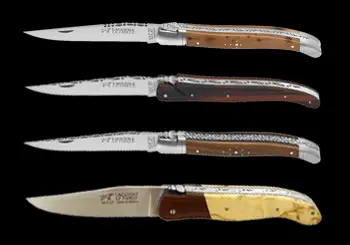
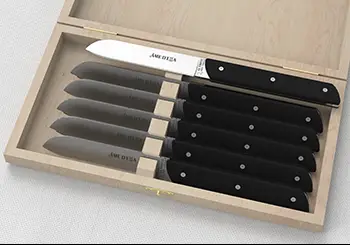
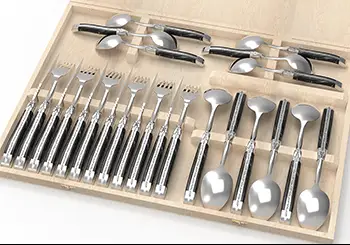
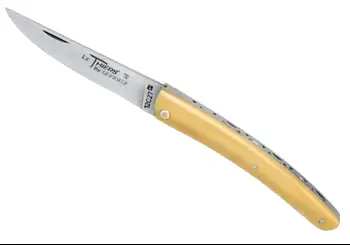
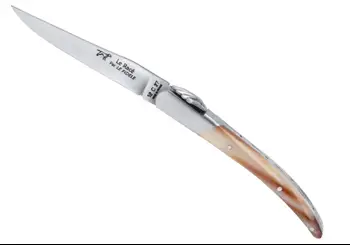
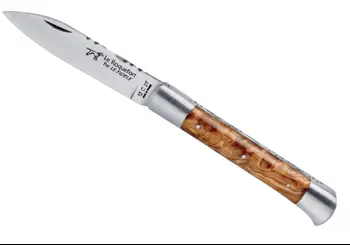
Damascus blade kitchen knife collection made in France with noble wood handles


Laguiole knife Damascus edition with gaiac wood handle and 2 stainless steel bolsters
Laguiole knife Damascus edition with ironwood handle and 2 stainless steel bolsters
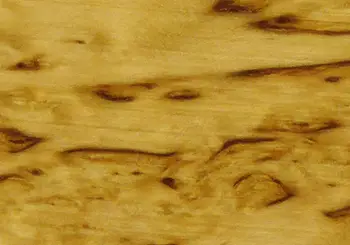
Laguiole knife Damascus edition with juniper wood handle and 2 stainless steel bolsters
Laguiole knife Damascus edition with oak wood handle and 2 stainless steel bolsters
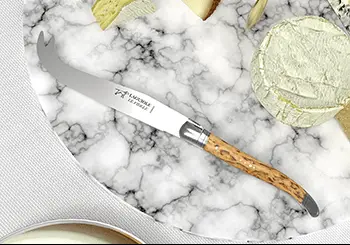
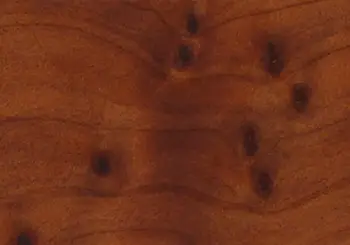
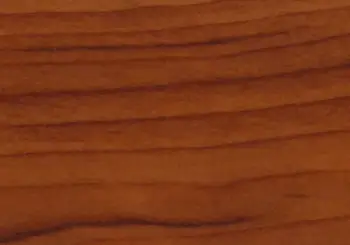
Laguiole knife Damascus edition with olive wood handle and 2 stainless steel bolsters
Laguiole knife Damascus edition with serpent wood handle and 2 stainless steel bolsters
FAQ: Laguiole Damascus Blade Knives
Are Damascus Laguiole knives good for everyday use?
Yes. They can be used daily for light cutting tasks, food preparation, and general utility work. However, many owners also choose a Damascus blade kitchen knife for collecting or gifting because of its unique appearance. What makes these knives especially attractive is that they do not force the buyer to choose between beauty and use. A well-made Damascus Laguiole can absolutely serve as a practical knife while still feeling more exceptional than an ordinary everyday blade.
Do Damascus blades require special maintenance?
Damascus blades should be kept clean and dry. Depending on the steel composition and finish, occasional light oiling may help protect the blade and maintain the contrast of the pattern. The key point is consistency rather than difficulty: careful hand washing, immediate drying, and gentle handling are usually enough to preserve both function and appearance. Premium visual finishes always benefit from a little extra attention.
Will the Damascus pattern fade over time?
With proper care, the pattern remains visible for many years. Avoid harsh abrasives and store the knife dry to preserve the finish and contrast of your damascus blade kitchen knife. The pattern is part of the blade structure and finish, but rough cleaning or neglect can reduce the sharpness of its visual contrast. Regular gentle care is the best way to keep the blade looking distinctive.
Is a Damascus Laguiole knife a good gift?
Yes. The unique blade pattern and premium appearance make a Damascus blade kitchen knife especially gift-worthy for birthdays, anniversaries, weddings, and collector occasions. It feels elegant and memorable even to someone who may not be deeply familiar with knives, because the blade itself immediately signals craftsmanship and distinction. Paired with a noble handle material, it becomes an especially strong premium gift choice.
How can I tell if a Damascus Laguiole knife is high quality?
Look for clean, even patterning, precise blade centering, smooth opening action, tight fit between parts, and well-finished details on the backspring and handle. A reputable seller should also provide clear origin and materials information. On a premium Laguiole Damascus knife, the overall impression should be one of coherence and care: not just an attractive blade, but a knife whose entire construction feels refined and deliberate.
What is the bee on a Damascus Laguiole knife?
The bee, sometimes called the fly, is a signature decorative detail located on the backspring and is one of the most recognizable characteristics of the Laguiole style. Its presence helps connect the more visually expressive Damascus blade to the broader tradition of French Laguiole cutlery. On better-quality knives, this detail is especially well integrated and contributes to the artisanal identity of the piece.
Are Damascus Laguiole knives mainly collector pieces or practical tools?
They can be both. Some buyers choose them mainly for everyday light cutting and appreciate the premium appearance as an added pleasure. Others are drawn primarily by the uniqueness of the Damascus pattern and the noble materials, which makes the knife feel more collectible. In practice, many owners appreciate that a Damascus blade kitchen knife can sit comfortably in both worlds: practical enough to use, yet distinctive enough to admire and keep.
Which handle material gives the most premium look with Damascus steel?
Ebony and horn are often considered the most visually luxurious pairings because their deep tones create strong contrast with the layered pattern of the blade. Olive wood is one of the most versatile choices because it remains refined while feeling warmer and more natural. Ironwood, gaiac, and serpent wood also create a strong premium impression for buyers who want something less common and more distinctive.
Quick Selection Guide
Most versatile Damascus choice
A mid-size Damascus Laguiole with an olive wood handle — balanced, elegant, and easy to match with many styles.
Most premium presentation
Damascus blade paired with ebony or horn for a more luxurious, high-contrast look and collector appeal.
Most distinctive wood character
Gaiac, ironwood, or serpent wood handle with Damascus blade — ideal for buyers who want a stronger artisanal identity and more unusual visual presence.
Frequent searches
- damascus blade kitchen knife
- Damascus blade kitchen knife Laguiole
- Laguiole Damascus knife
- pattern welded kitchen knife
- premium Damascus kitchen knife
- Damascus knife with olive wood handle
- Damascus knife with ebony handle
- Damascus Laguiole made in France
- best Damascus Laguiole knife
- Damascus blade knife gift
- mid-size Damascus folding knife
- Damascus knife with noble wood handle
- collector Damascus Laguiole knife
- high-end Damascus blade kitchen knife
- French Laguiole knife with Damascus blade
Summary
A damascus blade kitchen knife in the Laguiole tradition combines visual distinction, refined craftsmanship, and practical cutting performance. With its layered steel pattern, elegant French silhouette, noble handle materials, and strong gift appeal, a Laguiole Damascus knife offers far more than ordinary cutlery. Whether chosen for daily light use, for collecting, or for gifting, it remains one of the most expressive and premium options in the world of refined knives.


